VERITY
Smart Campus Management System
Overview
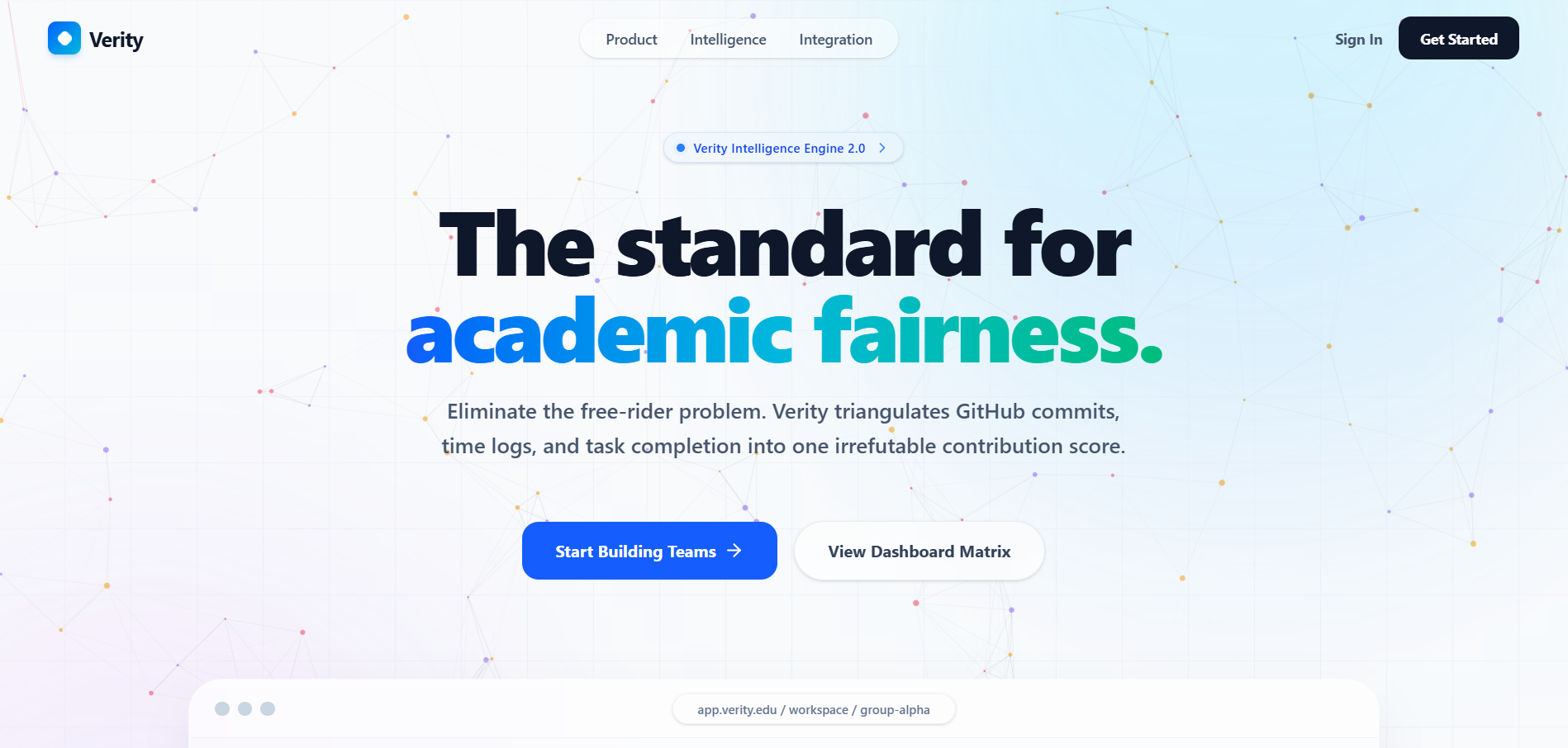
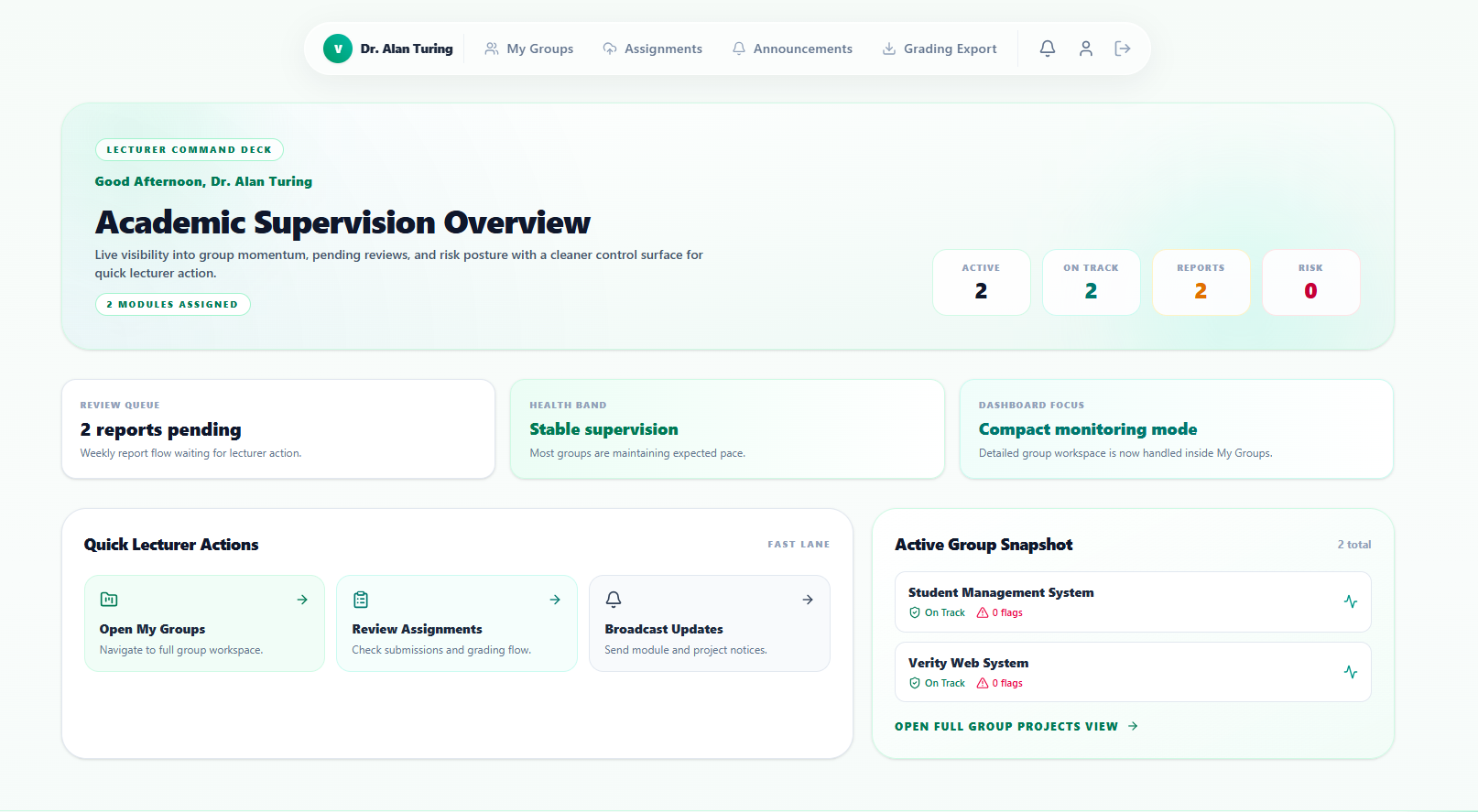
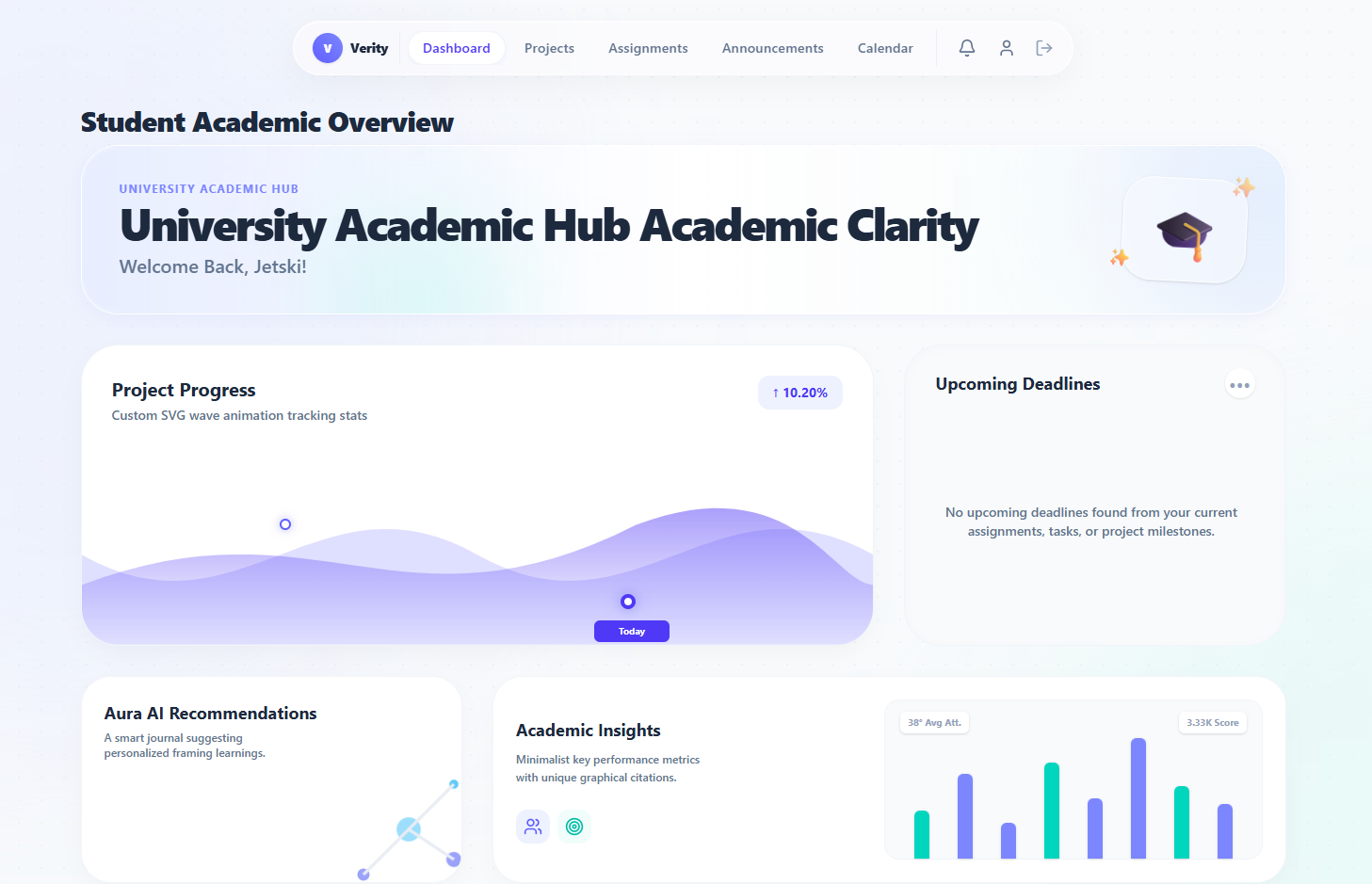
VERITY is a smart campus management platform that streamlines project work, academic coordination, and performance tracking for students, lecturers, and managers. It combines role-based dashboards, task and report management, GitHub contribution analysis, AI-powered team insights, real-time notifications, and admin controls into one integrated system.
The Problem It Solves
Managing academic projects often involves scattered tools for task tracking, code collaboration, and grading. VERITY centralizes these workflows. By providing distinct, tailored portals for Students, Lecturers, and Managers, it eliminates communication gaps and brings transparency to academic evaluations and team progress.
Dashboard Preview
Built With a Practical Stack
Frontend
Backend
Database & Cloud
Key Features & Core Functionalities
Role-Based Portals
Dedicated workspaces for Students (Kanban, time tracking), Lecturers (analytics, grading), and Managers (system settings).
AI-Powered Insights
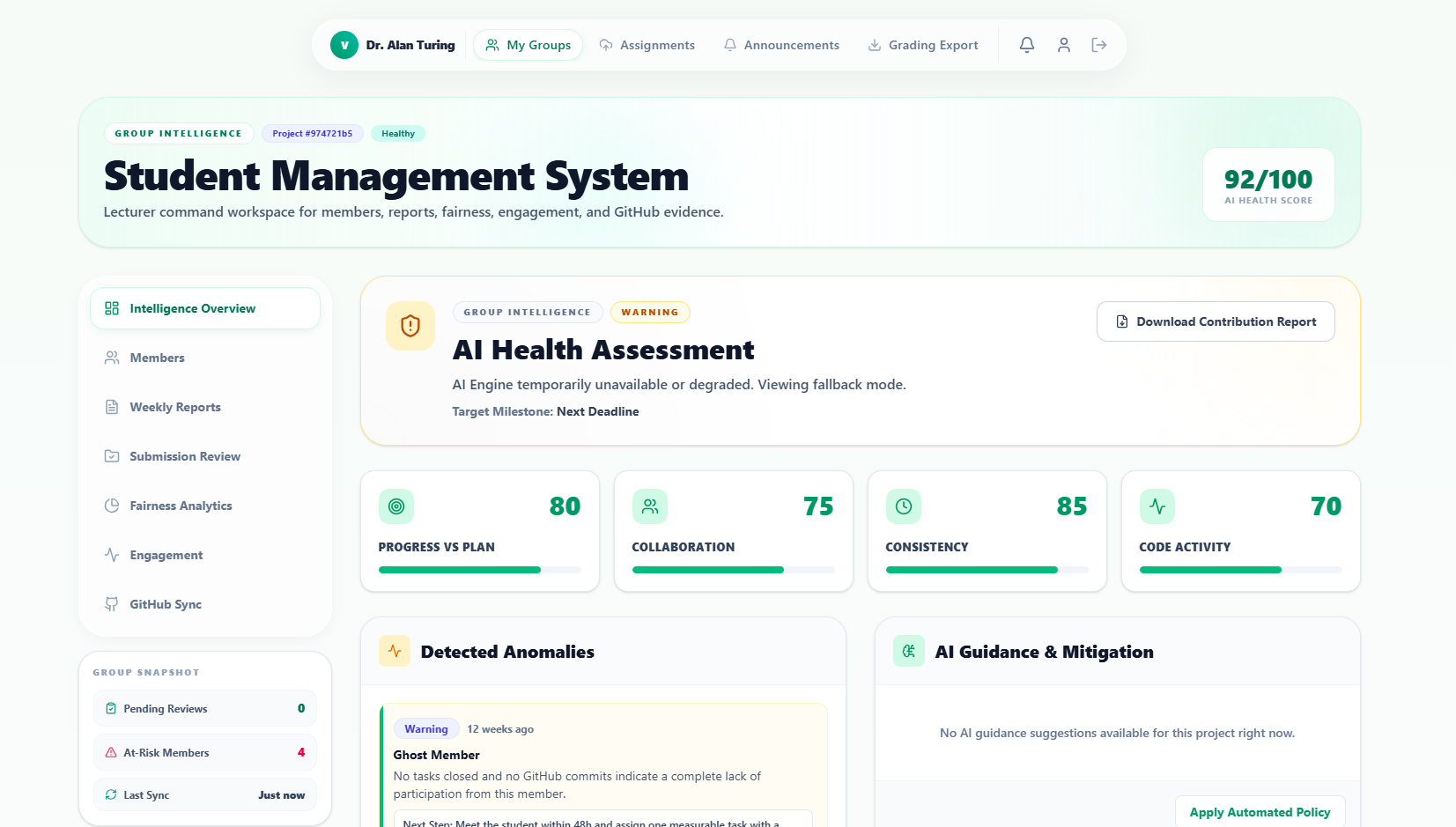
Leverages Google GenAI to generate project health insights and lecturer-facing reports.
GitHub Integration
Real-time repository linking, commit analysis, and automated contribution scoring.
Academic Integrity
Assignment handling with PDF/text extraction, plagiarism queues, and risk scoring.
Gamification
XP points, badges, and leaderboard caching to keep students motivated and engaged.
Real-Time Ecosystem
Role-aware announcements and live notifications using Socket.IO and Redis.
Engineering Decisions Tradeoffs
Engineering Decisions
Practical System Design
Discarded over-engineered, resource-heavy concepts (like blockchain) in favor of a highly feasible, scalable foundation using PostgreSQL, Prisma, and a modular Express API.
Real-World Team Coordination
Collaborated closely with actual academic team members to design the Kanban and Sprint planning tools, ensuring the UI reflects true team dynamics rather than theoretical workflows.
Real-Time Data Handling
Implemented live notifications and leaderboard caching by optimizing database queries and utilizing Redis alongside Socket.IO to ensure low latency across multiple concurrent user sessions.
The System Stores
- Users, roles, projects, tasks, sprints, and time logs
- Weekly reports, activity logs, notifications, and settings
- Repositories, commits, contributor maps, and scores
- Assignments, submissions, plagiarism matches, and risk flags
Why It Matters
The architecture stays readable and maintainable while still covering live academic workflows, giving the system enough structure to scale without introducing unnecessary complexity.